Searching for information about a Red Label Enterprises interview usually means you want to know more than just what questions might be asked. You may want to understand how to prepare, what the conversation could be like, what the employer may want to learn about you, and what you should ask before deciding whether the opportunity is right for you.
The best way to approach an interview is not to memorize a list of perfect answers. Instead, prepare to have a straightforward conversation about your experience, communication skills, goals, and understanding of the position.
Start with the position you actually applied for.
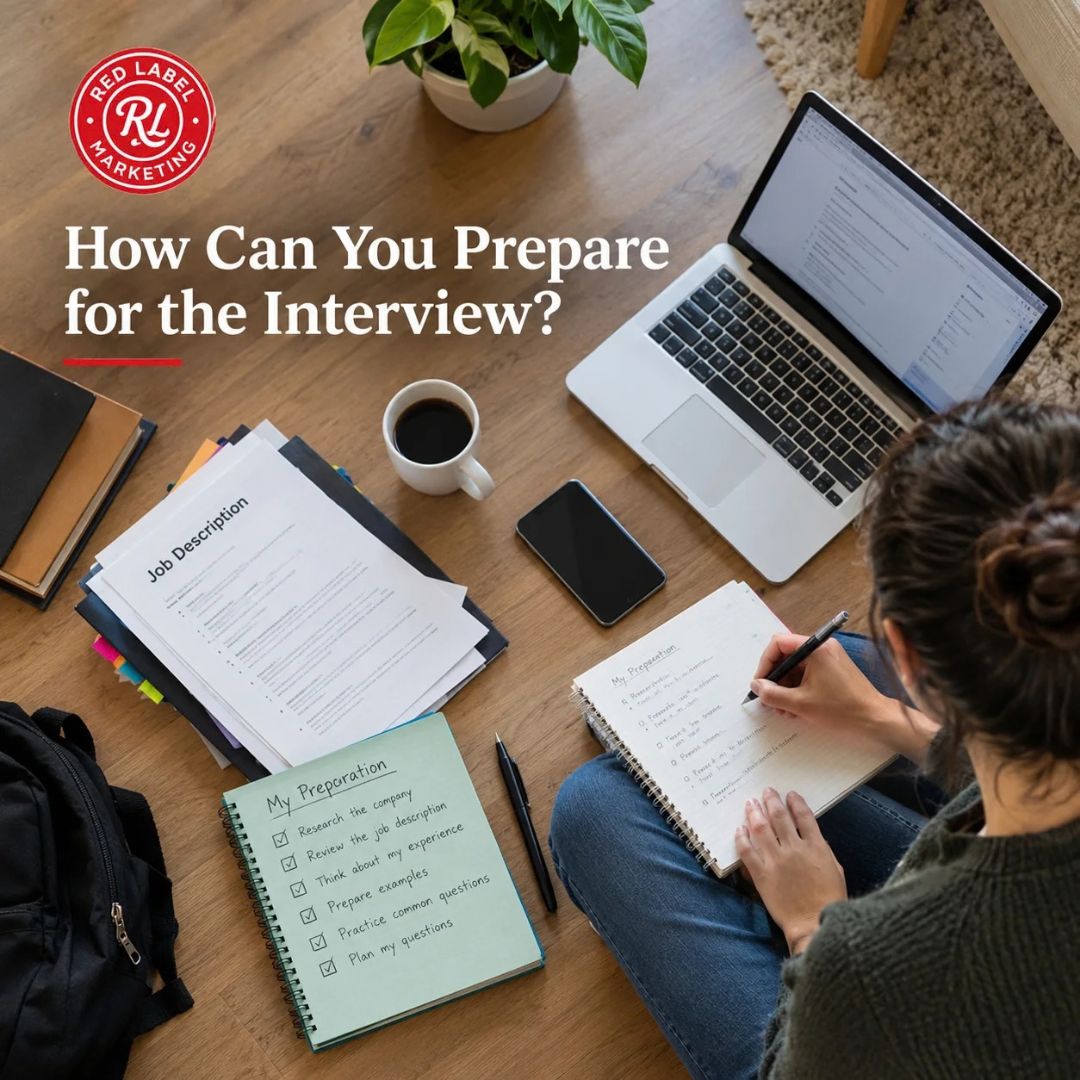
Read the job description again before your interview and make sure you understand the basic responsibilities. Think about why you applied and what parts of the position match your skills or interests.
You should also take some time to research the company through its official website. Look at the information available about its work, culture, and career opportunities rather than relying entirely on comments from third-party websites.
This gives you a better starting point for the conversation and helps you ask more useful questions.
Good preparation does not have to mean spending hours creating scripted answers.
Instead, prepare a few real examples from your previous experience. These do not necessarily have to come from another full-time job. School projects, volunteer work, internships, customer-facing experience, team activities, or other responsibilities can all help demonstrate how you communicate and work with people.
Consider situations where you:
The goal is not to make every answer sound impressive. A clear and honest example is usually more useful than a rehearsed response that does not reflect your actual experience.
There is no reason to assume that every applicant will receive the same questions or follow exactly the same interview process.
However, applicants can reasonably prepare for common areas of discussion.
You may be asked about your background, why you applied, your communication style, how you work with others, how you handle challenges, or what you are looking for in your next opportunity.
For example, an interviewer could ask:
“Why are you interested in this position?”
A strong answer should connect your actual interests to the position rather than simply saying that you need a job.
Another possible question could be:
“Tell me about a time you had to deal with a difficult situation.”
For this type of question, explain what happened, what you did, and what you learned from the experience.
You should also be prepared to discuss your availability and any experience that is directly relevant to the position.
Lack of extensive experience does not mean you have nothing to discuss.
If you are applying for an early-career opportunity, think about situations that demonstrate responsibility, communication, adaptability, and willingness to learn.
For example, you might talk about a school assignment where you worked with a group, a volunteer activity where you interacted with different people, or a situation where you had to learn a new responsibility quickly.
The important part is being able to explain what you actually did.
Do not exaggerate your experience simply because you think the interviewer expects a more impressive answer. If you do not know something, it is better to be honest and explain how you would approach learning it.
An interview should not be one-sided.
You are also evaluating the opportunity, so prepare several questions before the conversation.
Useful questions can include:
These questions can help you understand the actual position rather than making your decision based only on the job title.
They can also reveal whether the opportunity matches what you are looking for.
Compensation is a reasonable subject to discuss during the hiring process.
Red Label Enterprises’ current job information lists compensation of 20–23 per hour for the relevant positions, along with benefits and other employment details. Because compensation and employment terms can vary by position, applicants should confirm the details that apply specifically to the role they are considering.
Do not rely on an old review, social media comment, or an unrelated job listing to determine what you would receive.
The interview is an appropriate opportunity to ask for clarification about compensation, schedule, benefits, mileage or other role-specific terms when those details are relevant to the position.
Training is another area worth discussing rather than making assumptions.
Red Label Enterprises describes paid training as part of its employment opportunities. Applicants can still ask what that training involves, how long it typically lasts, and what they will be expected to learn during the initial period.
This is especially useful if you are entering a new type of role.
Instead of simply asking, “Do you provide training?”, a more useful question is:
“What does the initial training look like, and what would I be expected to handle independently afterward?”
That question gives you a much clearer picture of the transition from training to the actual role.
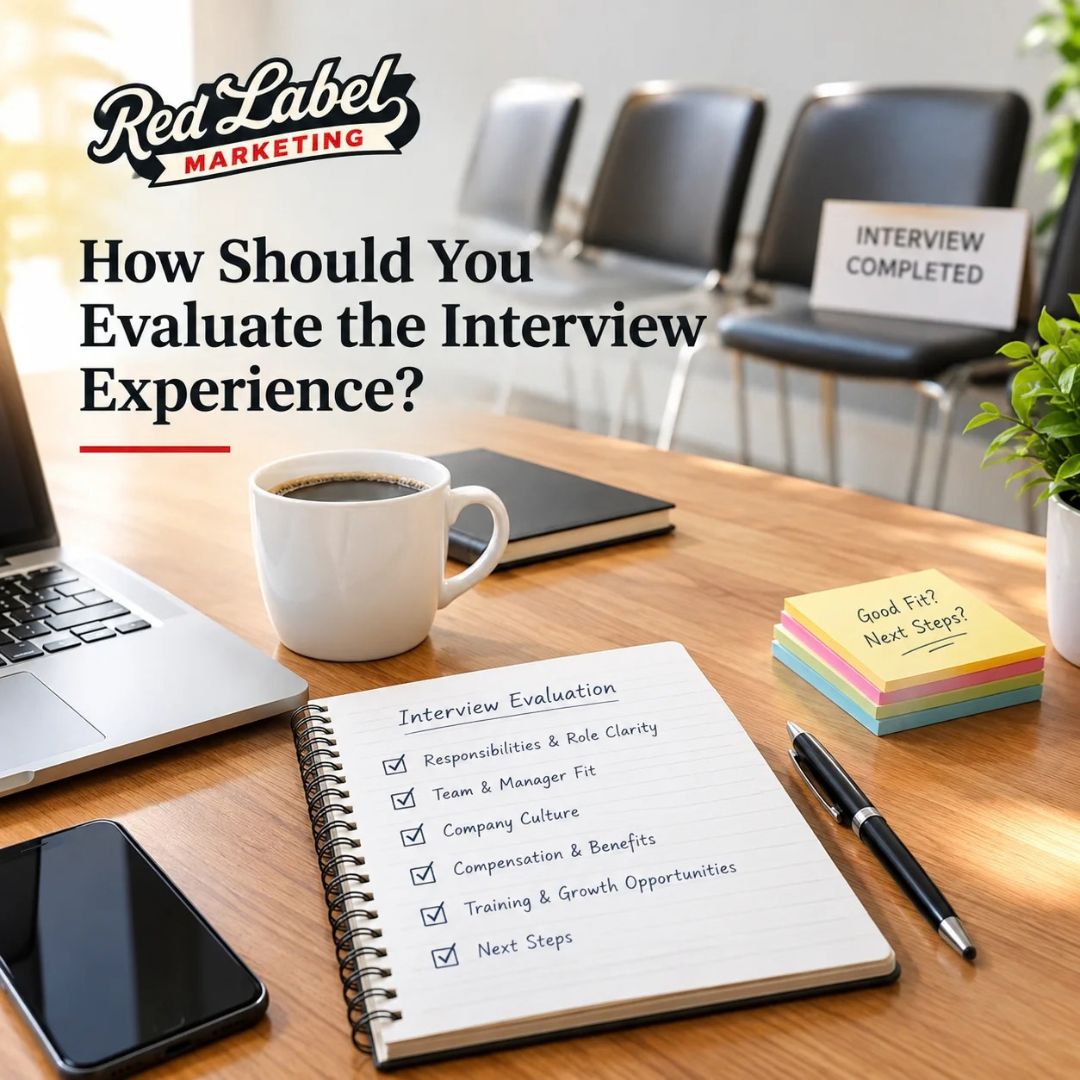
Pay attention to the questions you are being asked, but also pay attention to how your own questions are answered.
An interview should give you enough information to understand the opportunity.
If the interviewer clearly explains the responsibilities, expectations, schedule, compensation structure, and next steps, you have useful information for making a decision.
If something important remains unclear, ask about it before moving forward.
This is particularly important when you find information about a company on multiple websites. Online reviews can provide useful perspectives, but individual reviews may describe different positions, time periods, or personal experiences. They should be considered alongside current information from the employer.
The next step can vary depending on the position and hiring situation.
Do not assume that every applicant will receive the same timeline or number of interviews. If the interviewer does not explain the next step, it is perfectly reasonable to ask:
“What should I expect after today’s interview?”
This gives you a clearer understanding of whether there will be another conversation, additional information requested, or another stage in the hiring process.
If you are asked to provide additional information, make sure everything you submit is accurate and consistent with what you discussed during the interview.
A few simple habits can make the interview easier:
Research before you arrive.
Know what position you applied for and understand the basic responsibilities.
Be specific.
When discussing your experience, give real examples instead of relying on general statements.
Do not pretend to know everything.
If you are unfamiliar with something, explain that you are willing to learn.
Ask questions.
You should leave the interview with a better understanding of the opportunity than when you entered.
Discuss unclear details.
If something about the schedule, responsibilities, compensation, or expectations is unclear, ask for clarification.
Keep your answers natural.
An interview is a conversation, not a test in which every answer needs to sound perfect.
There is no universal answer because interviews can feel different depending on the position, the interviewer, and your own level of experience.
For many applicants, the most useful preparation is simply knowing what they applied for and being ready to discuss their background honestly.
You do not need to memorize complicated answers.
Focus on explaining who you are, what you have done, what you want to learn, and why the position interests you.
Preparing for a Red Label Enterprises interview should be about understanding the opportunity as much as preparing to impress the interviewer.
Research the position, bring real examples from your experience, ask questions when something is unclear, and take the time to understand the expectations before making a decision.
If you are interested in applying, review the current opportunities and application information on the official Red Label Enterprises Careers page before submitting your application.